Dr. Augustino Hellar of Jhpiego conducting male circumcision
By
Nasser Kigwangallah, recently in Dodoma
MALE
circumcision has been proven to prevent female-to-male infection with the human
immunodeficiency virus (HIV).
The theory that male circumcision may be
protective against HIV infection was invented and developed first in North
America and practiced in Africa.
This was revealed by Dr. Augustino Hellar, of Jhpiego
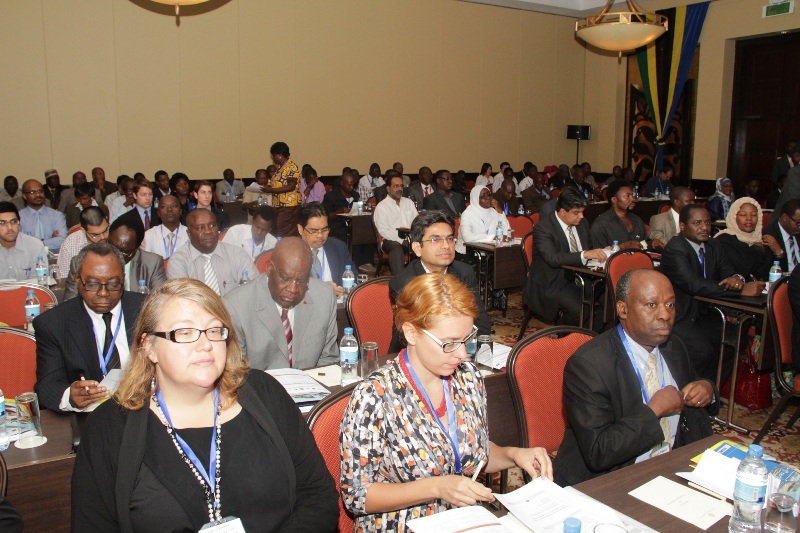
in his paper presented at a two day conference of Tanzania Parliamentarians
Aids Coalition (TAPAC) in Dodoma on Sunday last week.
According to Dr. Augustino Hellar, removing the
foreskin can prevent HIV infection by at least half.
He said those who advocate of male circumcision, have
further promoted male circumcision as a way of fighting the pandemic.
“Countries that have been practicing male
circumcision have low rate of HIV/AIDS infection as compared to those countries
that do not practice the norm,” he said.
He said numerous observational studies were
carried out in Africa.
Circumcision advocates conducted randomized
controlled trials (RCTs) in Africa.
Three RCTs to study the value of male circumcision
in reducing HIV infection have been conducted in Africa.
The studies were intended to find out if
circumcision is an effective intervention to prevent female-to-male HIV
infection.
A RCT was carried out in Orange Farm, South
Africa; a RCT was carried out in Kenya and a RCT was carried out in Uganda.
All three studies found that non-circumcised males
contract HIV infection more quickly than circumcised males.
All three studies were terminated early, before
the incidence of infection in circumcised males caught up with the incidence of
infection in the non-circumcised males.
He said: “National strategy for scaling up male
circumcisionfor HIV prevention started in Tanzania since 2009 by starting with
Iringa, Mbeya and Kagera regions,” he added.
According to him, the strategy intended to be
conducted in eight regions, now there are 12 regions conducting male
circumcision namely;
Mara,Rukwa,Iringa,Tabora,Mbeya,Mwanza,Kagera and
Shinyanga regions.
The World Health Organisation (WHO) recommended
that male circumcision, if done properly could reduce HIV/AIDS infection by 60
per cent.
Circumcision by male is one strategy of fighting
the spread of HIV/AIDS to a greater extent.
It is my hope that this initiative, if spread all
over the country, could be way effective ways of reducing the spread of
HIV/AIDS.
Circumcision practices are largely culturally
determined and as a result there are strong beliefs and opinions surrounding
its practice.
It is important to acknowledge that researchers'
personal biases and the dominant circumcision practices of their respective
countries may influence their interpretation of findings.
Circumcision does not prevent HIV infection, all
together if the particular person does not adhere to norms and practices of
abstinence and of being faithful to his wife or partner.
There are many methods of HIV transmission,
including: mother-to-child infection, transfusion of tainted blood, infection
with non sterile needles used in health care, infection by homosexual and
heterosexual anal intercourse, infection by needle sharing to inject illegal
drugs, traditional African scarring practices, tribal (ritual) circumcision,
female circumcision, male-to-female heterosexual transmission, and
female-to-male heterosexual transmission.
Male circumcision might only reduce infection by
the last method, so the overall influence on the HIV epidemic in Africa, at
best, would be likely to be slight, however, the risk of male-to-female
transmission is much higher than that of female-to-male transmission, so a
means of partial prevention that targets only the second means at the expense
of the first would be counterproductive.
There is no indication that male circumcision
would protect women.
Viral load is the chief predictor of the risk of
HIV transmission.
……………………………………………………………………………………….




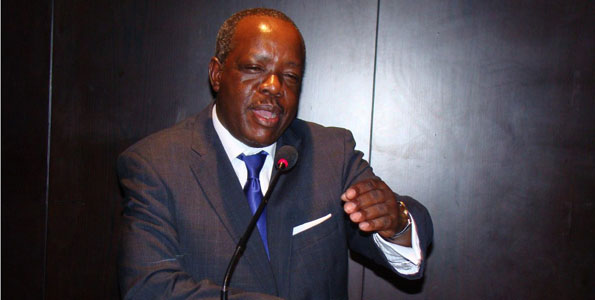 Professor Sospeter Muhongo, the Energy and Minerals minister
By Nasser Kigwangallah
THE government has reiterated its commitment to curb corruption and embezzlement of public funds saying that it will take stern and immediate steps to those found indulging in corrupt practices.
This was said by Professor Sospeter Muhongo, the Energy and Minerals minister in Dar es Salaam yesterday at a one day stakeholders meeting.
The meeting was called by his ministry to show case and commitment to the public on their performance and how they have committed themselves in implementing twenty nine projects aimed at electrifying Tanzania.
“I want to tell you that I and my team of experts in the ministry declare to you that we are committed in implementing various electricity projects in the country and anyone of us who fails to perform will face the wrath and ultimately will be dismissed from job outright,” he said angrily.
He said Tanesco, the power utility firm, has already sacked 49 officials for being unfaithful to their work.
Tanzania has coal reserves of up to 5 billion tones, more than thrice its previously stated figure of about 1.5 billion tones and sees no reason at all why Tanzania could continue to face blackout day in and day out.
The country produces coal from two mines mainly for domestic power generation.
He said: “Developing coal production is part of broader energy strategy, which includes exploiting recent big gas finds.”
He added that the government's power generation mix will focus on generating power from natural gas, coal, hydro-power and renewable energy sources.
According to him, in 2011 China's Sichuan Hongda Co. Ltd. signed a USD3 billion deal with the country to mine coal and iron ore and build a 600-megawatt coal-fired power plant.
Tancoal Energy, a joint venture between Australian-listed Intra Energy Corporation and Tanzania's government, runs the Ngaka coal project, while Tanzania's other mine at Kiwira is run by the state.
The government, he said has plans in which Kiwira and Tancoal will produce power plants with 400 megawatts capacity.
Recent oil and gas explored recently at Songo Songo in Kilwa and Mnazi Bay in Mtwara will make the country able to turn Tanzania into a hydrocarbons exporter.
.......................................................................................................................
Professor Sospeter Muhongo, the Energy and Minerals minister
By Nasser Kigwangallah
THE government has reiterated its commitment to curb corruption and embezzlement of public funds saying that it will take stern and immediate steps to those found indulging in corrupt practices.
This was said by Professor Sospeter Muhongo, the Energy and Minerals minister in Dar es Salaam yesterday at a one day stakeholders meeting.
The meeting was called by his ministry to show case and commitment to the public on their performance and how they have committed themselves in implementing twenty nine projects aimed at electrifying Tanzania.
“I want to tell you that I and my team of experts in the ministry declare to you that we are committed in implementing various electricity projects in the country and anyone of us who fails to perform will face the wrath and ultimately will be dismissed from job outright,” he said angrily.
He said Tanesco, the power utility firm, has already sacked 49 officials for being unfaithful to their work.
Tanzania has coal reserves of up to 5 billion tones, more than thrice its previously stated figure of about 1.5 billion tones and sees no reason at all why Tanzania could continue to face blackout day in and day out.
The country produces coal from two mines mainly for domestic power generation.
He said: “Developing coal production is part of broader energy strategy, which includes exploiting recent big gas finds.”
He added that the government's power generation mix will focus on generating power from natural gas, coal, hydro-power and renewable energy sources.
According to him, in 2011 China's Sichuan Hongda Co. Ltd. signed a USD3 billion deal with the country to mine coal and iron ore and build a 600-megawatt coal-fired power plant.
Tancoal Energy, a joint venture between Australian-listed Intra Energy Corporation and Tanzania's government, runs the Ngaka coal project, while Tanzania's other mine at Kiwira is run by the state.
The government, he said has plans in which Kiwira and Tancoal will produce power plants with 400 megawatts capacity.
Recent oil and gas explored recently at Songo Songo in Kilwa and Mnazi Bay in Mtwara will make the country able to turn Tanzania into a hydrocarbons exporter.
.......................................................................................................................


.jpg)
.jpg)
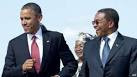.jpg) By Nasser Kigwangallah in Dar es Salaam
THE much awaited US President Barack Obama finally arrived in Dar es Salaam, the largest and commercial capital of Tanzania on Monday noon.
He was welcomed by his host, Jakaya Kikwete the Tanzanian president and other top government dignitaries.
Obama was welcomed by troupes of traditional dancers, to say that he hoped Tanzania would benefit from a regional trade partnership that would improve lives in ways that foreign aid cannot.
"We are looking at a new model that's based not just on aid and assistance, but on trade and partnership," he said.
He added that ultimately, the goal here is for Africa to build Africa for Africans.
Tanzanian President Jakaya Kikwete praised Obama and his predecessor, George W, Bush, who provided the country with millions of dollars in aid to prevent the spread of HIV, spending that Obama has cut in Africa.
Obama praised Bush's funding for AIDS treatment and the two will have a brief meeting in the country where Bush is attending a conference on African women organized by his institute.
Hundreds of young people lined the streets wearing T-shirts and sarongs bearing images of Obama in the biggest welcome of his three-country visit to Africa. He has already visited Senegal and South Africa.
Obama's message has been that African countries must work hard to strengthen good governance practices and ensure human rights abusers are held to account.
Obama pledged to foster further bilateral cooperation that existed between the two countries.
"I am very happy to see President Obama. It has been my dream since he got into power because he's such a charismatic person," said many people who lined along the root in which Obama and his entourage passed.
But others criticized his trip to Tanzania, saying they know Obama is coming for "American interests and that his trip to the country has brought hardship to local people than ever in their lives which has been disrupted.
"One thing I would like to note is that there has been a scramble for Tanzania's resources, like gas and gold, and there's an obvious competition between the U.S. and China," said retired teacher Jesca Mbelwa, 65.
"But I want to see Africans benefit from their resources first and second the Americans or the Chinese."
…………………………………………
By Nasser Kigwangallah in Dar es Salaam
THE much awaited US President Barack Obama finally arrived in Dar es Salaam, the largest and commercial capital of Tanzania on Monday noon.
He was welcomed by his host, Jakaya Kikwete the Tanzanian president and other top government dignitaries.
Obama was welcomed by troupes of traditional dancers, to say that he hoped Tanzania would benefit from a regional trade partnership that would improve lives in ways that foreign aid cannot.
"We are looking at a new model that's based not just on aid and assistance, but on trade and partnership," he said.
He added that ultimately, the goal here is for Africa to build Africa for Africans.
Tanzanian President Jakaya Kikwete praised Obama and his predecessor, George W, Bush, who provided the country with millions of dollars in aid to prevent the spread of HIV, spending that Obama has cut in Africa.
Obama praised Bush's funding for AIDS treatment and the two will have a brief meeting in the country where Bush is attending a conference on African women organized by his institute.
Hundreds of young people lined the streets wearing T-shirts and sarongs bearing images of Obama in the biggest welcome of his three-country visit to Africa. He has already visited Senegal and South Africa.
Obama's message has been that African countries must work hard to strengthen good governance practices and ensure human rights abusers are held to account.
Obama pledged to foster further bilateral cooperation that existed between the two countries.
"I am very happy to see President Obama. It has been my dream since he got into power because he's such a charismatic person," said many people who lined along the root in which Obama and his entourage passed.
But others criticized his trip to Tanzania, saying they know Obama is coming for "American interests and that his trip to the country has brought hardship to local people than ever in their lives which has been disrupted.
"One thing I would like to note is that there has been a scramble for Tanzania's resources, like gas and gold, and there's an obvious competition between the U.S. and China," said retired teacher Jesca Mbelwa, 65.
"But I want to see Africans benefit from their resources first and second the Americans or the Chinese."
…………………………………………


